
Furnaces are your bread and butter of your HVAC system. You rely on it to keep you warm when the weather outside is cold, and you rely on it in the summer to keep you cool. Your furnace is essential to balancing the temperature and humidity, as well as keeping the air clean in your home. That’s why if your furnace breaks, you need a qualified and reliable heating contractor to fix your furnace.
Our gas technicians are licensed and trained to install and service furnaces, both gas and electric.
Don’t neglect the equipment that keeps you and your family warm, sign up for annual furnace maintenance and save yourself the expense of surprise break-downs.
Need a new furnace? We only install the best brands that we trust. Call us for a free quote.
Furnace services in Uxbridge
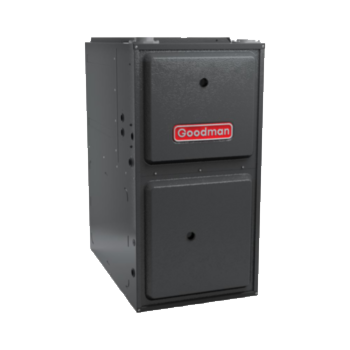

Our chosen brand for furnaces is Goodman. The sister company of Daikin and Amana, Goodman has a long established reputation of being one of the most reliable furnaces on the market. While some other brands have seen a drop in quality, Goodman has held its standards. Unlike some of its competitors, Goodman has a surplus of replacement parts available at affordable prices throughout Ontario. So if your furnace ever breaks down in Uxbridge, a replacement part can be acquired and installed in very short order, saving you from waiting a week or more without heat. McKeever Heating and Air Conditioning is proud to be a Goodman dealer, as we strive to provide Uxbridge with reliable heating in its harsh winter climate.
Goodman Furnaces
Warranty
10 Years Parts Replacement
10 Years Unit Replacment
Lifetime Heat Exchanger Replacement
10 Years Labour Warranty (Optional)
1 Year Labour Warranty covered by McKeever Heating and Air Conditioning Inc.
Featured Products
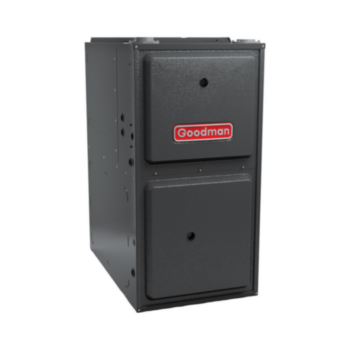
GRVM97
High Efficiency, Modulating, Variable-Speed, ECM Gas Furnace
97% AFUE
Communicating control board compatible with the GXV6S Heat Pump and the GTST Smart Thermostat
Durable aluminized-steel primary heat exchanger and stainless steel secondary heat exchanger
Modulating gas valve for maximum gas usage efficiency
Variable speed blower for minimal energy usage and silent operation
Energy Star rated
GRVT96
High Efficiency, Two-Stage, Variable-Speed, ECM Gas Furnace
96% AFUE
Communicating control board compatible with the GXV6S Heat Pump and the GTST Smart Thermostat
Durable aluminized-steel primary heat exchanger and stainless steel secondary heat exchanger
Two-stage gas valve for more efficent gas usage
Variable speed blower for minimal energy usage and silent operation
Energy Star rated
GR9T96
High Efficiency, Two-Stage, Multi-Speed, ECM Gas Furnace
96% AFUE
Non-communicating, self-diagnostic control board
Durable aluminized-steel primary heat exchanger and stainless steel secondary heat exchanger
Two-stage gas valve for efficient gas usage
Multi-speed blower for efficient energy usage and quiet operation
Reliable and economical
GR9S96
High Efficiency, Single-Stage, Multi-Speed, ECM Gas Furnace
96% AFUE
Non-communicating, self-diagnostic control board.
Durable aluminized-steel primary heat exchanger and stainless steel secondary heat exchanger
Single-stage gas valve
Multi-speed blower for efficient energy usage and quiet operation
High airflow static pressure capability
Common Furnace Questions
Q: How often should I replace my furnace filter?
A: Generally, every three months for 1” thick filters, and every six months for 5” thick filters. You may have to change your filter more often if you have pets or if your ducts art dirty.
Q: How often should I clean my ducts?
A: You should clean your ducts after every renovation or major construction occurs in the house. Other than that, they should be cleaned at least every 20 years to ensure healthy air in your home.
Q: How long to furnaces generally last?
A: Usually fifteen to twenty years. Longer if maintained consistently.
Q: Do I need to maintain my furnace every year?
A: Yes, your furnace needs to be maintained yearly to ensure safe operation and prevent surprise breakdowns during winter. Insurance may not cover any damages due to furnace malfunction and warranties may not be applicable if there is no record of maintenance on your furnace. Signing up for our service plan is the most efficient way of ensuring your furnace has been checked by a certified gas technician every year.
Q: My furnace is blowing cold air. What do I do?
A: If your furnace is blowing cold air, first make sure your thermostat is on. If the screen is off, change the batteries. Then, make sure you have your mode set to heat. Check what your indoor temperature is and what your target temperature is. If target temperature is greater than indoor temperature, the furnace should kick on. Some thermostats have a five minute delay for a call for heat. If cold air still blows or nothing happens, check to make sure the gas is turned on at the furnace. If it is on, and nothing works, check to see what the error code is on the bottom door of the furnace through the eye glass. Some furnaces blink a red light a certain number of times then stop, some say “E”, followed by a number. Look up what the error code is in the manual or on the back of the bottom furnace door. Then call us to book an diagnostic and tell us what the error code is. This helps us prepare for the kind of problem we will encounter when we reach your house.
Why Choose Us?
We implement thorough diagnostics and maintenance on your furnace to such a length that few of our competitors go to. We will find those hard to catch furnace issues that no other contractor could. While others will try to sell you a new furnace as soon as the diagnosis gets too hard, we dig deeper into the problem to find the root cause, like a doctor working on his patient. Our expert knowledge of furnaces will you save money on replacement and get your heat back on faster.
Our standards are in compliance with TSSA regulations. On every service call, we make sure to take proper readings to ensure furnace safety, including:
Combustion analysis
A combustion analysis measures Carbon Monoxide, Carbon Dioxide, Oxygen, and Excess Air in the furnace exhaust. These readings show us the health of your heat exchanger, which is essential to know to protect you from poisonous CO gas leaking into the air of your home. CO should read <100ppm, CO2 typically ranges between 5-10%, O2 should range between 5-12%, and excess air should ideally be <100%, with some models allowing for more excess air.
Gas pressure
Gas manifold pressure directly affects furnace efficiency and heat exchanger health. If there is too much gas pressure, the furnace is burning more fuel than it needs to produce the amount of heat required for your home, and can lead to incomplete combustion and overheating of the heat exchanger. Too little gas pressure will lead to insufficient heat output for your home. It is essential to make sure gas pressures are set according to manufacturer’s specifications on every service call.
Flame sensor microamps
The flame sensor is a safety device that senses the presence of flame during the ignition process. If there is no flame, the flame sensor senses this and tells the control board to close the gas valve. Sometimes, the flame sensor gets dirty or cracked enough to prevent it from sensing flame. Microamps indicate the level of current the flame induces on the flame sensor, which is interpreted on the control board to determine if there is flame present or not. Proper microamp readings typically range between 1.5-10 microamps, with some ranges being different depending on the manufacturer.
Ventor motor amps
The ventor motor is what draws in combustion air to the burners, and forces out exhaust gas outside. The amperage the motor runs on is directly related to the speed at which it vents out the exhaust. If the speed is too low, the pressure switches will sense the drop in draft pressure and open the circuit, extinguishing the flame. We read the amps on the ventor motor to check if the motor is running at the proper speed. If too low, it indicates a weak motor and must be replaced. If too high, there may be a blockage in the venting system or the motor bearings are wearing. It is important to check ventor motor amperage to ensure optimal furnace performance.
Total external static pressure
Total external static pressure (TESP) is the blood pressure of your HVAC system. The ducts are the veins, and the furnace is the heart. TESP must be below a certain pressure, typically <0.5”w.c, to allow proper airflow to the supply air registers. If TESP is over 0.5”w.c, this can lead to high supply air temperature at the heat exchanger (causing it to wear faster), blower overworking to move air throughout the house (leading to premature motor failure), and a noisy fan and can be very annoying. Common causes are undersized return or supply ducts, closed supply air registers, oversized furnace, undersized filter cabinet, too few return air grills, filters in return air grills, and dirty ducts. We check TESP on every service call to help diagnose furnace issues and establish future steps to improving airflow.
Proper condensate drainage
High efficiency furnaces condense the flue gases in the secondary heat exchanger, which then must be properly drained. Clogged drain lines will cause the heating to stop working. Drain clogs are very common furnace problems we face, and is why we blow through the drain lines on every service call to rule out any clogs and to ensure safe heating operation.
Even after our services are completed, we are always available for any furnace related questions you may have. When you choose us for furnace service, you will leave the experience knowing more about your furnace system than you did before. Call us now or book an appointment online to put your furnace in good hands.